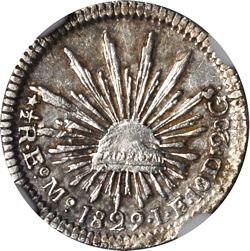
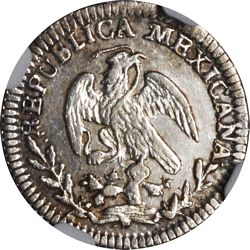
KM 370.4 ½r 1829 EoMo LF (Stack's Bowers Baltimore auction, March 2011, lot 8132)
Diameter 16 mm., 1.69 g., 0.90277 silver.
| Date | Asssayer | Recorded Mintage |
Comment |
| 1829 | LF |
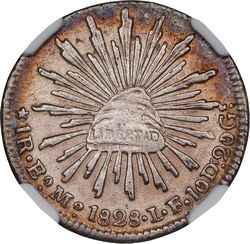
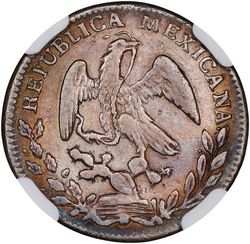
KM-372.3 1r 1828 EoMo LF (Stack’s-Bowers auction of Kirk Menczer Collection, 23 June 2026, lot 72304)
Diameter 20 mm., 3.38 g., 0.90277 silver.
| Date | Asssayer | Recorded Mintage |
Comment |
| 1829 | LF |
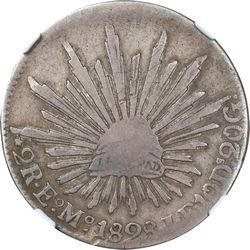
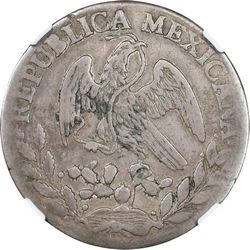
KM-374.5 2r 1828 EoMo LF (Stack’s-Bowers auction of Kirk Menczer Collection, 24 June 2026, lot 73037)
Diameter 22 mm., 6.76 g., 0.90277 silver.
| Date | Asssayer | Recorded Mintage |
Comment |
| 1829 | LF |
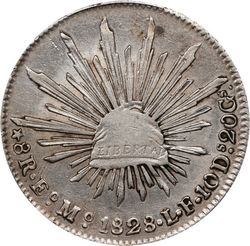
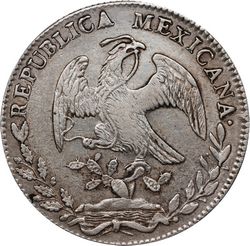
KM-377.5 8r 1828 EoMo LF (Stack’s-Bowers auction 16 January 2026, lot 41099)
Diameter 39 mm., 22.07 g., 0.90277 silver. The 8 reales was produced in 1828, 1829 and the first half of 1830.
| Date | Asssayer | Recorded Mintage |
Comment |
| 1828 | LF | ||
| 1829 | LF | illustrated below | |
| 1830 | LF | illustrated below | |
| 1830/20 | LF | illustrated below |
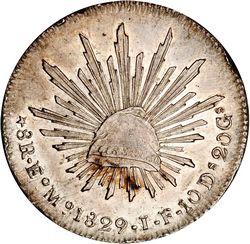
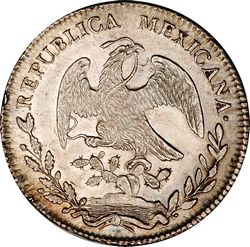
KM-377.5 8r 1829 EoMo LF (Stack's Bowers Baltimore auction, November 2010, lot 6276)
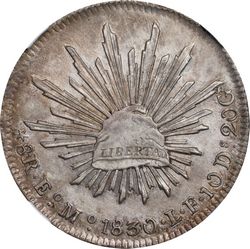
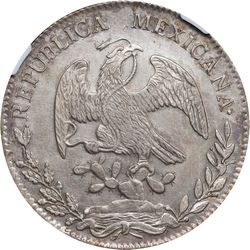
KM-377.5 8r 1830 EoMo LF (Stack’s-Bowers auction, 26 August 2025, lot 41399)
As the mint only operated until July of 1830, the coins struck with the 1830 date are most elusive within this already challenging series. An overdate 1830 over 1820 is known.
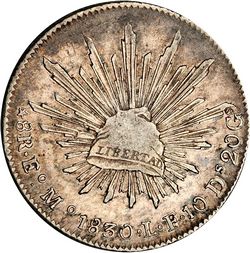
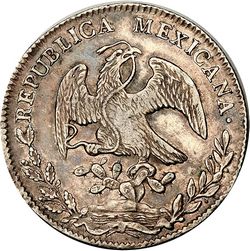
KM-377.5 8r 1830/20 EoMo LF (Stack’s-Bowers Baltimore auction, 4 November 2010, lot 6277)
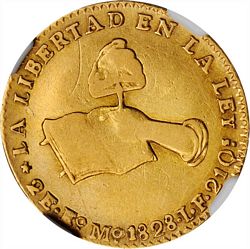
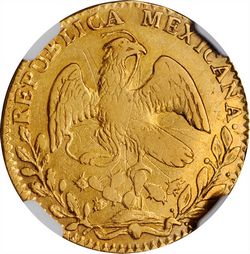
KM-380.2 2E 1828 EoMo LF (Stack’s-Bowers auction, 6 August 2020, lot 21476)
Diameter 23 mm., 6.77 g., 0.8750 gold
| Date | Asssayer | Recorded Mintage |
Comment |
| 1828 | LF |
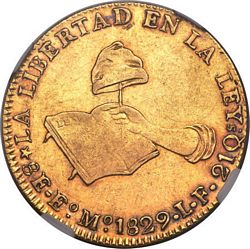
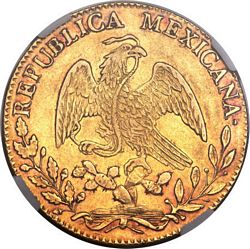
KM 383.4 8E 1829 EoMo LF (lot 31253, Heritage Long Beach auction, September 2014)
Diameter 37 mm., 27.07 g., 0.8750 gold. The 8 escudos coin was minted in 1828 and 1829.
| Date | Asssayer | Recorded Mintage |
Comment |
| 1828 | LF | ||
| 1829 | LF |
In 1957, Alberto Pradeau published his great book Historia Numismática de México de 1823 a 1950, volume I{footnote} Alberto Francisco Pradeau. Historia Numismática de México de 1823 a 1950. Tomo I. Edición Patrocinada por la Sociedad Numismática de México. 1957{/footnote}, and on page 503 wrote the following information related to the assayers of the Tlalpan mint.
ENSAYADORES: Luis Velázquez de la Cadena, ensayador propietario; Franscisco Parodi, segundo ensayador propietario; Luis Parodi, primer suplente; Manuel Onofre Parodi, segundo suplente,
GRABADORES: Manuel Araos.
Miguel Ramírez.
Also, on the same page, Pradeau concludes the following regarding the L.F. assayers of the E°M° mint: Las inciales L.F. que aparecen en la moneda acuñada en esta ceca, corresponden a los nombres de pila de D. Luis Velazquez de la cadena y de D. Francisco Parodi Pagani (The initials L.F. that appear on the coins minted at this mint (E°M°) correspond to the first names of Luis Velázquez de la Cadena and Francisco Parodi Pagani.)
And finally, on page 507, the list of assayers (ensayadores) of the E°M° mint changes:
ENSAYADORES: D. Luis Velázquez de la Cadena,
D. Francisco Pagani, (sic)
D. Luis Varela,
D. Francisco Lelo de Larrea,
D. Manuel Onofre Parodi,
D. Antonio de la Portilla.
As the reader can see, Alberto Pradeau listed seven different assayers for the State of Mexico mint: Luis Velázquez de la Cadena, Francisco Parodi (and later writes it as Francisco Pagani, concluding that it was Francisco Parodi Pagani), Luis Parodi, Manuel Onofre Parodi, Luis Valera, Francisco Lelo de Larrea and finally Antonio de la Portilla.
Since then, all authors who published numismatic books and articles (both from Mexico and the USA) related to the coinage of the E°M° mint (1828-1830) continued to repeat Francisco Parodi Pagani{footnote} The only Francisco Pagani I could locate was born in Mexico City on 14 October 1792, and was the son of the Italian Luis Pagani Zanona and María Antonia Rodríguez Zenteno from Mexico City.{/footnote} as the second assayer of this mint, which is totally wrong.
While looking for genealogical information about the only assayer who appears on all the coins minted by the Guadalupe y Calvo (G.C.) mint in the state of Chihuahua, Manuel Parodi (M.P.){footnote}Manuel Onofre Parodi Ortiz (Zimapán, Hidalgo, ca. 1810-1811 – Culiacán, Sinaloa, 11 February 1875) was an assayer at the mints of the State of Mexico (1828-1830), Guadalupe y Calvo (1843-1851), Culiacán (1854), Hermosillo (1866), and again in Culiacán (1871-1874). In the Mexican newspaper El Monitor Republicano No. 3,916, dated 1 May 1871, there is a note from the State Secretariat and the Office of Finance and Public Credit appointing him assayer at the Oaxaca State Mint, a position he never actually held, demonstrating the significant disorganization within the Mexico’s mints. He is one of the very few assayers who worked in four different mints in the Mexican Republic.{/footnote} I located, by pure serendipity, the marriage certificate of Francisco Lelo de Larrea where it is specified that he was an assayer at the Tlalpan mint.
In the Mexico City newspaper El Sol of 25 December 1827 a list appears of the managers and employees working at that time at the State of Mexico Mint.
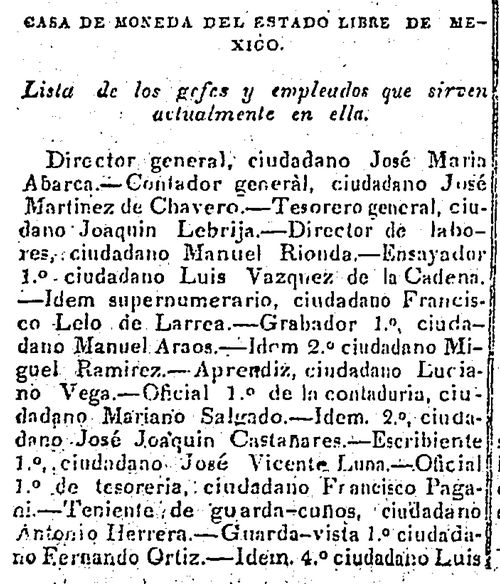
Luis Velázquez de la Cadena appears as First Assayer, Francisco Lelo de Larrea as Supernumerary Assayer{footnote}A supernumerary employee is used to fill temporary vacancies or to carry out activities of a purely transitory nature.{/footnote}, and Francisco Pagani as First Treasury Officer. This notice appeared exactly four months and two days before operations began at the State of Mexico Mint.
Marriage certificate of Francisco Lelo de la Larre{footnote}Francisco Lelo de Larrea was baptized in the Church of Santo Domingo in what is now the municipality of Santo Domingo Tehuantepec, Oaxaca, on 22 September 1804, with the name Francisco de Paula María de Jesús Josef Agustín Ygnacio Joaquín Mariano Judas Tadeo Lelo de Larrea Terán. Francisco Lelo de Larrea died in Mexico City on 4 March 1871{/footnote} with María Dolores de Rosas, celebrated in Tlalpan on 11 September 1829, where Luis Velázquez de la Cadena and Manuel Parodi both appear as witnesses. Both the groom and the two witnesses indicate that they were assayers at the Tlalpan Mint.
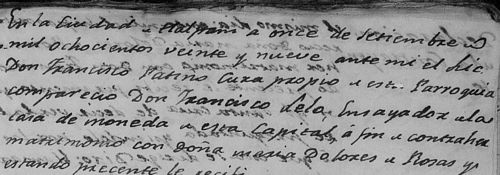
En la Ciudad de Tlalpam a once de Setiembre de mil ochocientos veinte y nueve ante mí el Lic. Don Francisco Patiño cura propio de esta Parroquia compareció Don Francisco Lelo, Ensayador de la Casa de Moneda de esta capital, á fin de contraer matrimonio con Doña María Dolores de Rosas y estando precente le recibí […] (In the City of Tlalpan, on the eleventh of September, one thousand eight hundred and twenty-nine, before me, Licentiate Don Francisco Patiño, priest of this Parish, appeared Don Francisco Lelo, Assayer of the Mint of this capital, in order to contract marriage with Doña María Dolores de Rosas, and being present, I received him […])

First witness for the couple getting married. […] In the same act: before me, the undersigned priest, the couple getting married presented as their witness a man whom I know, who stated his name was Don Luis Velásquez de la Cadena, Assayer of this Mint, a native of […]
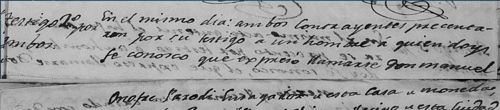
Second witness for the couple getting married. […] En el mismo día: ambos contrayentes precentaron por su testigo a un hombre á quién fé conosco que expresó llamarse Don Manuel Onofre Parodi Ensayador de esta Casa de Moneda […] ([…] On the same day: the couple getting married presented as their witness a man whom I know, who stated his name was Don Manuel Onofre Parodi, Assayer of this Mint […])
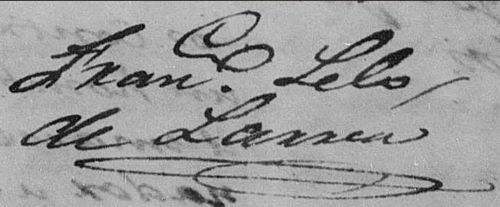
Signature of the second Assayer of State of Mexico Mint (Francisco Lelo de Larrea)
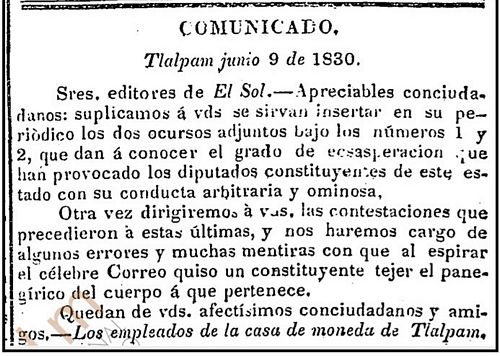
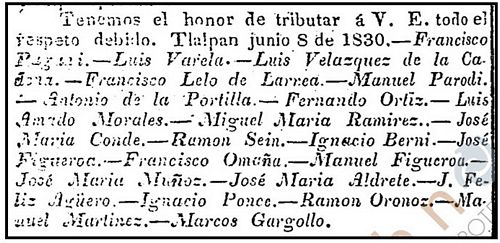
Again, in the Mexico City newspaper El Sol of 11 June 1830, a note dated 9 June 1830 was published by employees of the Tlalpan mint (when its closure had already been authorized), listing the assayers Luis Velázquez de la Cadena, Francisco Lelo de Larrea, and Manuel Parodi. Francisco Pagani does not appear in that note.
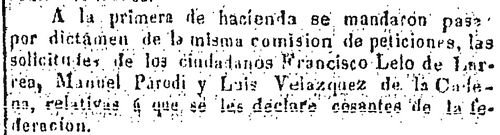
Also, on the front page of El Sol of 6 January 1832, a note was published in which Francisco Lelo de Larrea, Manuel Parodi, and Luis Velázquez de la Cadena request to be declared unemployed by the Federation (Federal Government). The three assayers from the now-defunct Tlalpan Mint appear together again.
Alberto Pradeau documented a lot of names while working on his monumental three-volume work, Historia Numismática de México de 1823 a 1950 (plus another fourth volume of plates and illustrations), which inherently led to errors. Francisco Parodi Pagani does not actually exist. It is likely that while working on the chapter of his book about the E°M° mint, Pradeau confused and mixed up the names of different people. As can be seen in the list of managers and employees of the Tlalpan mint (1827), Francisco Pagani worked as treasurer and subsequently disappears from newspaper records, leading to the conclusion that he engaged in other activities outside the Tlalpan mint.
See also “State of Mexico Mint (1828-1830)” presented by Adrián González Salinas at the Sociedad Numismática de México, 8 July 2024.
Guadalajara is the capital of the state of Jalisco and the second largest city in Mexico. The mint was opened under Spanish Colonial rule in 1812. The first Republican coinage was minted in 1825. Cap and Rays 8 Reales were coined during the following periods: 1825-1863, 1867-1870, and 1873-1895. Although the mint was captured briefly in 1860 during the Reform War, coinage of the 8 Reales series continued. Coinage was suspended from 1864 to 1866 during the Maximilian era. The Imperial Forces of Maximilian occupied the Guadalajara mint from 5 January 1864 until 19 December 1866. It is possible ·some coinage took place during this time using Republican dies . This could possibly account for the unusual overdate 1863/4. Minting a "República Mexicana" coin with a date prior to the occupation might have been more acceptable to the Imperialists. Another interruption came in 1870-1873 when the Balance Scale Peso was issued. The Guadalajara mint was closed on 30 June 1895.
| from | to | |
| 1824 | unknown | Government of the State of Jalisco |
| unknown | 1 July 1857 | Government of the Republic of Mexico |
| 1 July 1857 | 13 August 1868 | Antonio A. Solana, J.S. Laguerene, Gama & Company |
| 13 August 1868 | 1874 | Government of the Republic of Mexico |
| 1874 | 1876 | unknown |
| 1876 | 1879 | Government of the Republic of Mexico |
| l March 1880 | 1 March 1891 | Cia. Limitada Central de Casas de Moneda de México |
| 1 March 1891 | 30 June 1895 | Symon & Camacho |
| Initial | Name | Began on | Left office on |
| FS | Francisco Suarez | 1825{footnote}since 1818 under the Spanish Colonial rule{/footnote} | 1836 |
| LP | unknown | 1830 | 1831 |
| JG |
Juan de Dios Guzman |
1836 | 1839 |
| 1842 | |||
| 1845 | 1868 | ||
| MC | Manuel Cuevas | 1838 | 1841 |
| 1843 | 1845 | ||
| FV | Unknown | 1863 | |
| JM | Jesús P. Manzano | 1867 | 1869 |
| IC | Ignacio Canizo | 1869 | 1870 |
| 1873 | 1878 | ||
| MC | Manuel Contreras | 1874 | 1875 |
| JA | Julio Arancivia | 1877 | 1880 |
| FS |
Fernando Sáyago was born around 1849. On 25 August 1886 Fernando Sáyago entered into a contract with Carlos Pacheco, the Secretario de Fomento,to establish an Oficina Central de Grabado. As well as being an assayer, Sáyago had another interest, as on 5 September 1889 he and Juan C. Padilla were given a monopoly for ten years to make various types of bricks{footnote}Anuario de legislación y jurisprudencia, Año 1886, núm. 10,561{/footnote}. These were supplied to the Mexico City government in 1890 to pave sidewalks and is September 1892 the town council was considering buying a further 25,000 bricks for their sidewalks{footnote}El Correo Español, 4 September 1892{/footnote} Sáyago was a teniente de ensayador in the Ensaye Mayor in 1890 and in June of that year he was named Ensayador Mayor de la República on the death of Francisco Morales{footnote}El Siglo Diez y Nueve, 18 June 1890{/footnote}. He was on the town council of Mexico City, being elected third regidor for 1893{footnote}El Siglo Diez y Nueve, 19 December 1892{/footnote} and first regidor for 1894{footnote}La Voz de México, 19 December 1893{/footnote}. However, he only held the post of president municipal for a few days as he began feeling unwell on 2 January. A troublesome laryngeal condition quickly turned into a deadly croup, suffocating him in a very short time. He died on 7 January 1894{footnote}The Two Republics, vol. XXXVIII, no. 7, 9 January 1894: La Patria, Año XVIII, Núm. 5,132, 9 January 1894{/footnote}, He was succeeded as presidente municipal by Sebastián Camacho. |
1880 | 1882 |
| TB | Trinidad Barrera | 1882 | 1884 |
| AH | Antonio Hernandez y Prado | 1884 | 1885 |
| JS |
In January 1884 he was awarded the title of Ingeniero Ensayador y Apartador de metales by unanimous consent {footnote}La Voz de México, Tomo XV, Núm. 21, 23 January 1884{/footnote}. In 1896 he was Jefe del Ensaye Federal de Guadalajara. Schiaffino was involved in local politics. He served on the Guadalajara city council, being president for the years for the years 1898, 1900, 1901 and 1903 (though he is also recorded as mayor at a banquet on 5 February 1902{footnote}The Mexican Herald, Vol. XIII, No, 157, 6 February 1902{/footnote}, and elected as an alternate deputy to the state legislature of 1901{footnote}La Patria de Mexico, Año XXIV, Núm. 7,199, 14 November 1900{/footnote}. He died in Guadalajara on 23 May 1925. |
1885 | 1895 |
The assayers on its decimal coinage were:
| Initial | Name | Began on | Left office on |
| C | Ignacio Cañizo y Soto | 1869 | 1877 |
| A | Julio Arancivia | 1877 | 1881 |
| S | 1880 | 1882 | |
| B | Trinidad Barrera | 1883 | 1884 |
| H | Antonio Hernández y Pravo | 1884 | 1885 |
| S | José S. Schiafino | 1885 | 1895 |
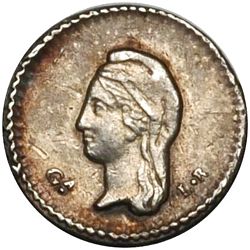
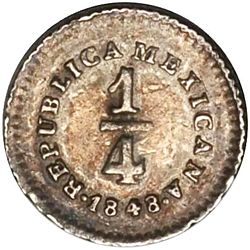
KM-368.3 ¼r Guadalajara 1848 GaLR (Stack’s Bowers Baltimore Auction, 28 March 2011, lot 8087)
Diameter 12 mm. 0.845 g, 0.90277 silver
| Date | Asssayer | Recorded Mintage |
Comment |
| 1842 | JG | ||
| 1843 | JG | ||
| 1843.2 | JG | illustrated below | |
| 1843 | MC | ||
| 1844 | MC | ||
| 1844 | LR | ||
| 1845 | LR | ||
| 1846 | LR | ||
| 1847 | LR | ||
| 1848 | LR | ||
| 1851 | LR | ||
| 1852 | LR | ||
| 1854 | LR | ||
| 1855 | LR | ||
| 1857 | LR | ||
| 1862 | LR |
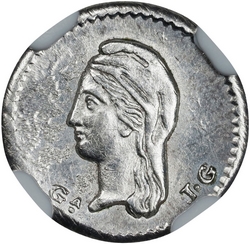
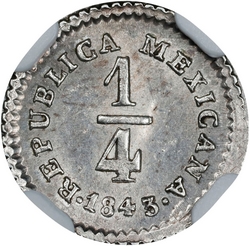
KM-368.3 ¼r 1843/2 Ga JG (Stack’s Bowers Kirk Menczer Collection, 23 June 2026, lot 72007)
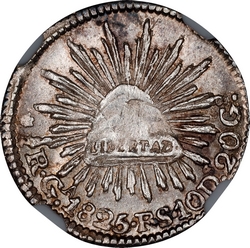
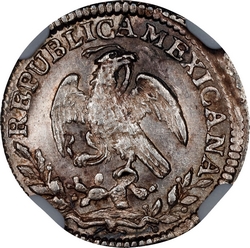
KM-370.5 ½r 1825 Ga FS (Stack’s Bowers Kirk Menczer Collection, 23 June 2026, lot 70298)
Diameter 16 mm. 1.690 g, 0.90277 silver
For a consideration of the rarity of Guadalajara ½ real see here.
| Date | Asssayer | Recorded Mintage |
Comment |
| 1825 | FS | ||
| 1826 | FS | ||
| 1828 | FS | reported | |
| 1828/7 | FS | ||
| 1829 | FS | ||
| 1830/29 | FS | illustrated below | |
| 1831 | LP | ||
| 1832 | FS | medal axis | |
| 1834/3 | FS | coin axis | |
| 1835 | FS/LP | 5/4/3 | |
| 1837 | JG | ||
| 1837/6 | JG | illustrated below | |
| 1838/7 | JG | ||
| 1838/7 | JG/FS | 9/8/7 | |
| 1839 | MG | ||
| 1840 | MC | ||
| 1840/39 | MC | illustrated below | |
| 1841 | MC | ||
| 1841 | JG | ||
| 1842 | JG | medal axis | |
| 1843 | JG | coin axis | |
| 1843/2 | JG | coin axis (illustrated below) | |
| 1843 | MC/JG | ||
| 1844 | MC | ||
| 1845 | MC | small cap | |
| 1845 | MC | large cap | |
| 1845 | JG | small cap | |
| 1846 | MC | large cap | |
| 1846 | JG | small cap | |
| 1847 | JG | ||
| 1848 | JG | ||
| 1848/7 | JG | illustrated below | |
| 1849 | JG | ||
| 1850 | JG | ||
| 1850/49 | JG | illustrated below | |
| 1851/0 | JG | illustrated below | |
| 1852 | JG | ||
| 1853 | JG | ||
| 1854 | JG | ||
| 1855/4 | JG | ||
| 1855 | JG | ||
| 1856 | JG | ||
| 1857 | JG | ||
| 1858 | JG | ||
| 1858/7 | JG | illustrated below | |
| 1859/7 | JG | illustrated below | |
| 1860 | JG | ||
| 1860/59 | JG | illustrated below | |
| 1861 | JG | ||
| 1862/1 | JG | small A |
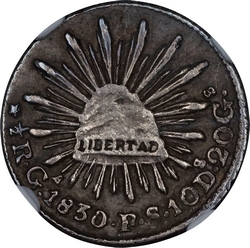
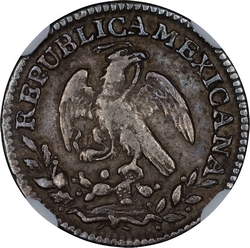
KM-370.5 ½r 1830/29 Ga FS (Stack’s Bowers Kirk Menczer Collection, 23 June 2026, lot 72100)
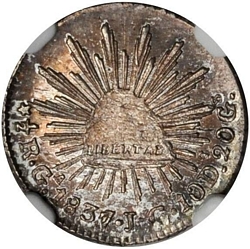
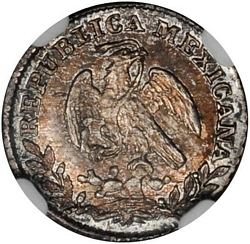
KM-370.5 ½r 1837/6 Ga JG (Ponterio Baltimore auction, 28 March 2011, lot 8137)
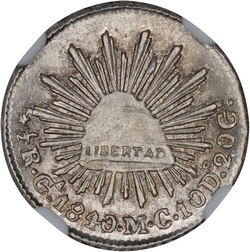
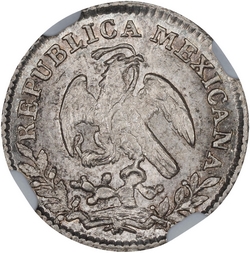
KM-370.5 ½r 1840/39 Ga MC (Stack’s Bowers Kirk Menczer Collection, 23 June 2026, lot 72107)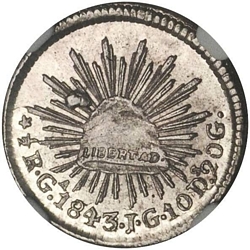
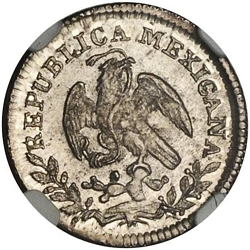
KM-370.5 ½r 1843/2 Ga JG (Ponterio Baltimore auction, 28 March 2011, lot 8140)
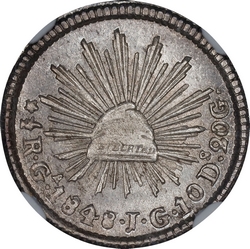
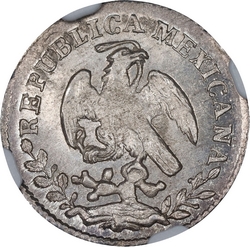
KM-370.5 ½r 1848/7 Ga JG (Stack’s Bowers Kirk Menczer Collection, 23 June 2026, lot 72115)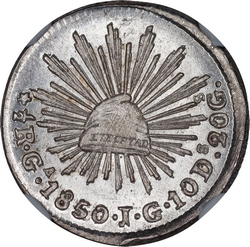
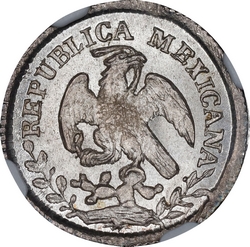
KM-370.5 ½r 1850/49 Ga JG (Stack’s Bowers Kirk Menczer Collection, 23 June 2026, lot 72117)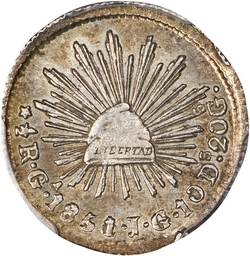
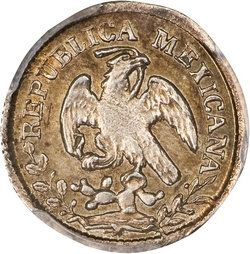
KM-370.5 ½r 1851/0 Ga JG (Stack’s Bowers NYINC auction, 23 January 2025, lot 39283)
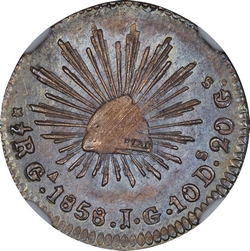
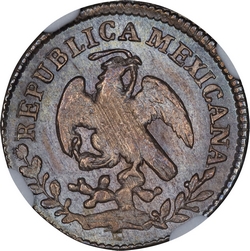
KM-370.5 ½r 1858/7 Ga JG (Stack’s Bowers Kirk Menczer Collection, 23 June 2026, lot 72123)
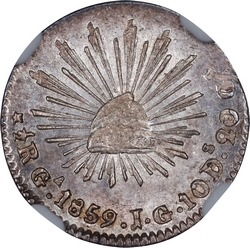
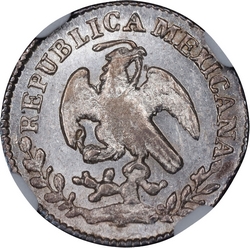
KM-370.5 ½r 1859/7 Ga JG (Stack’s Bowers Kirk Menczer Collection, 23 June 2026, lot 72124)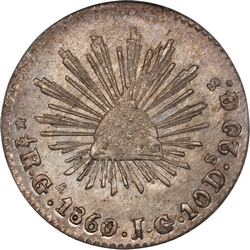
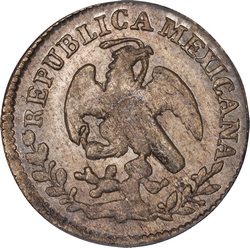
KM-370.5 ½r 1860/59 Ga JG (Stack’s Bowers Kirk Menczer Collection, 23 June 2026, lot 72125)
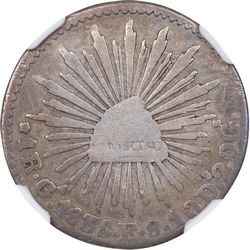
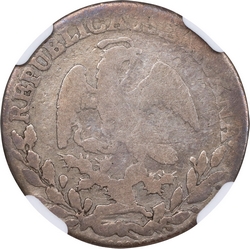
KM-372.4 1r 1835 Ga FS (Stack’s Bowers Kirk Menczer Collection, 23 June 2026, lot 72312)
Diameter 20 mm. 3.380 g, 0.90277 silver
| Date | Asssayer | Recorded Mintage |
Comment |
| 1826 | FS | ||
| 1828 | FS | ||
| 1828/7 | FS | illustrated below | |
| 1829 | FS | ||
| 1829/8 | FS | illustrated below | |
| 1829/8/7 | FS | illustrated below | |
| 1830 | FS | ||
| 1831 | LP | ||
| 1831 | LP/FS | ||
| 1832 | FS | ||
| 1834/3 | FS | illustrated below | |
| 1835 | FS | ||
| 1837/6 | JG/FS | ||
| 1837/6 | JG | illustrated below | |
| 1837/5 | FS | ||
| 1838/7 | JG/FS | ||
| 1839 | JG | ||
| 1840 | MC | ||
| 1840 | JG | ||
| 1841 | MC | medal axis | |
| 1842/0 | JG/MC | ||
| 1842 | JC | medal axis | |
| 1843 | JC | coin axis | |
| 1843 | MC | coin axis | |
| 1844 | MC | ||
| 1845 | JG | ||
| 1846 | JG | ||
| 1847/6 | JG | ||
| 1847 | JG | ||
| 1848 | JG | ||
| 1849 | JG | ||
| 1850 | JG | ||
| 1850/49 | JG | illustrated below | |
| 1851 | JG | ||
| 1852 | JG | ||
| 1853/2 | JG | illustrated below | |
| 1854 | JG | ||
| 1855 | JG | ||
| 1856 | JG | ||
| 1857/6 | JG | illustrated below | |
| 1857 | JG | ||
| 1858/7 | JG | ||
| 1859/8 | JG | ||
| 1859 | JG | ||
| 1860/50 | JG | ||
| 1860/59 | JG | illustrated below | |
| 1861/0 | JG | ||
| 1861 | JG | ||
| 1862 | JG |
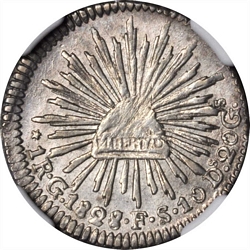
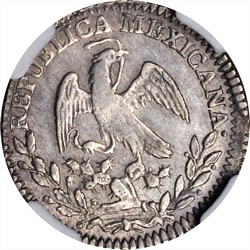
KM-372.4 1r 1828/7 Ga FS (Stack’s Bowers auction, 13 February 2019, lot 71316)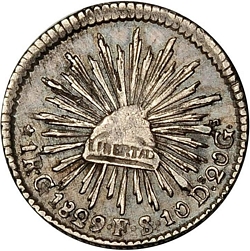
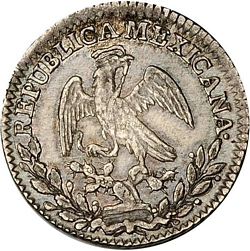
KM-372.4 1r 1829/8/7 G FS (Ponterio Baltimore auction, 28 March 2011, lot 8178)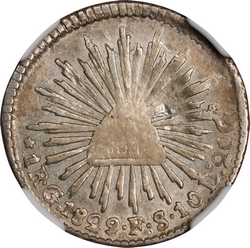
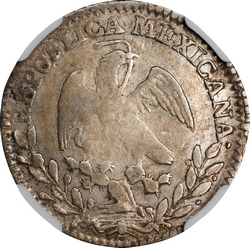
KM-372.4 1r 1829/8 Ga FS (Stack’s Bowers Kirk Menczer Collection ,23 June 2026, lot 72306)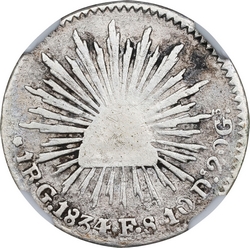
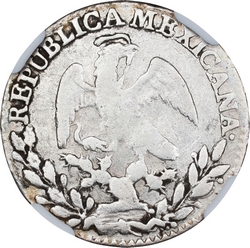
KM-372.4 1r 1834/3 Ga FS (Stack’s Bowers Kirk Menczer Collection ,23 June 2026, lot 72311)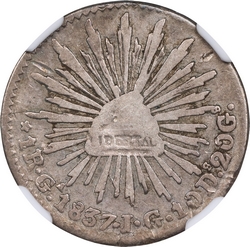
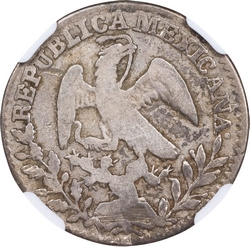
KM-372.4 1r 1837/6 Ga JG (Stack’s Bowers Kirk Menczer Collection ,23 June 2026, lot 72313)
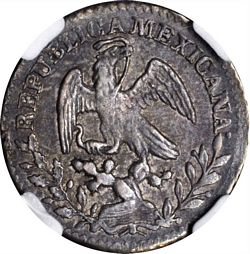
KM-372.4 1r 1850/49 Ga JG (Stack’s Bowers Kirk Menczer Collection ,23 June 2026, lot 72323)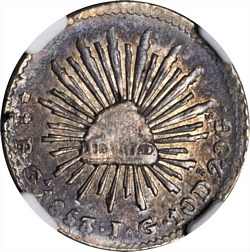
KM-372.4 1r 1853/2 Ga JG (Stack’s Bowers auction, 13 February 2019, lot 71325)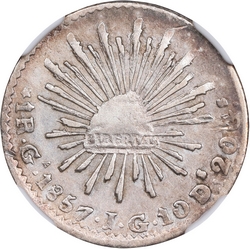
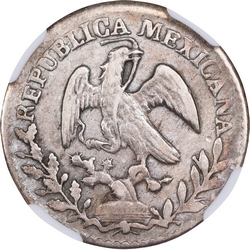
KM-372.4 1r 1857/6 Ga JG (Stack’s Bowers Kirk Menczer Collection ,23 June 2026, lot 72328)
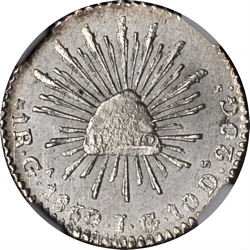
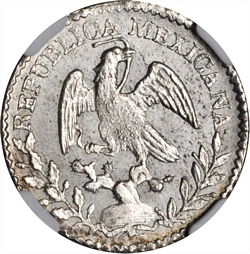
KM-372.4 1r 1860/59 Ga JG (Stack’s Bowers auction, 13 February 2019, lot 71326)
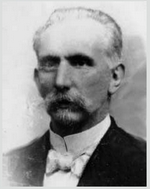 José Salvador Schiaffino Ametller was born in Sayula, Jalisco on 4 January 1848, the son of Mariano Schiaffino y Vallarta and Adela Ametller y Ponce de León.