The Mexico City mint
Mexico City is the nation 's capital and home to the íirsl mint established in the New World in 1536. The first silver issue of the Republic of Mexico was the Profile or Hook-neck Eagle Cap and Rays 8 Reales minted in Mexico City in 1823. No other mint issued Republican 8 Reales in 1823. The 8 Reales series was interrupted twice from 1823 until its conclusion in 1897. The first interruption was during the Maximilian era, when the mint was under the control of the Imperial forces from 7 June, 1863 to 20 June 1867. The second was for the issuance of the Balance Scale Peso 1869 - 1873.
Mínt owners or lessees and their tenures
| from | to | |
| 1824 | 13 April 1847 | Government of the Republic of Mexico |
| 13 April 1847 | 6 April 1857 | Palamade de la Roche y Cia.with the association of the Mackintosh Mint Company: however, in January 1850 Mackintosh sold his shares and co-tenant rights to Juan Antonio Béistegui. |
| 6 April 1857 | 1858 | Bellange y Temple |
| 1858 | 1 January 1869 | Juan Temple |
| 1 January 1869 | 31 March 1872 | Government of the Republic of Mexico |
| 1 April 1872 | 31 January 1893 | Francisca Temple de Ajuria |
| 31 January 1893 | 1905 | Government of the Republic of Mexico |
Assayers and their tenures (as evidence by coinage)
| Initial | Name | Begins on | Ends on |
| JM |
José Garcia Anzalda and Manuel Ruiz Tejada
Tejada was appointed Ensayador 1o Supernumerio of the Mexico City mint by royal cédula of 5 May 1815 “to reward his knowledge (para premiar sus concocimientos)”, a position he held until his death. He served in various legislatures, and in 1847 took up arms in defence of his country. On 10 February 1866 Emperor Maximilian invested him as a Knight of the Imperial Order of the Mexican EagleLa Sociedad, Tomo VI, Núm. 966, 15 February 1866. He died on 28 January 1867.La Sociedad, Tomo V. Núm. 1,299, 1 February 1867. |
1823since 1822 under Iturbide | 1832 |
| MJ | Manuel Ruiz Tejada and Jose Carda Anzaldo | 1833 | |
| ML | Manuel Ruiz Tejada and Luis Velazquez de la Cadena | 1833 | 1836 |
| 1837 | |||
| 1838 | 1842 | ||
| MF | Manuel Ruiz Tejada and Francisco Lelo de Larrea | 1836 | |
| 1844 | 1847 | ||
| MM | unknown | 1837 | 1838 |
| 1842 | 1843 | ||
| MF | unknown | 1844 | 1847 |
| RC | unknown | 1847 | |
| GC | Joaquín González and Sebastían Camacho | 1848 | 1855 |
| GF | unknown | 1855 | 1857 |
| FH |
unknown and Francisco Hermosa Francisco Hermosa was born in Mexico City on 13 January 1829. He entered the Colegio de Mineria in 1843 and graduated as an Ensayador-Apartador de Metales on 5 September 1849. He then worked in the mining areas of Guanajuato, El Oro and Tlalpujahua and in 1857 produced a small work entitled Manual de Laboreo de Minas y Beneficio de metals, dispuestopara uso de los mineros y azogueros de la República Mexicana. He was appointed ensayador at the beginning of May 1857 and served for thirty-three years, retiring on 5 December 1889. He died on 14 May 1891El Tiempo, 26 May 1891. |
1858 | 1860 |
| TH | unknown and Francisco Hermosa | 1860 | 1861 |
| 1863 | |||
| CH | unknown and Francisco Hermosa | 1863 | 1869 |
| PH | unknown and Francisco Hermosa | 1868 | |
| MH | Antonio Mucharras and Francisco Hermosa | 1873 | 1874 |
| 1877 | 1890 | ||
| BH | Mariano Barcena and Francisco Hermosa | 1874 | 1876 |
| AM | Adolfo Medina | 1890 | 1908 |
| AB | Antonio de la Barrera | 1895 | 1896 |
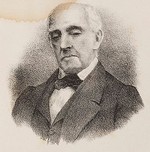 Manuel Ruiz de Tejada was born in Aguascalientes on 11 October 1779. On 1 January 1792 he enrolled in the Escuela de Minas (then the Real Seminario de Minería) in Mexico City, the day that it opened, and spent part of his course at mines in Zacatecas before graduating with the highest honours. He then substituted for the ailing professor of Mathematics and on the latter’s death took over the post. On the death of the professor of Physics, he took over that role, which he held for sixty years. As the corps of professors of Minería was the only scientific body in Mexico at that time, all questions that should have been decided by government or individuals were passed to them and Tejada, always part of the relevant commission, propounded and decided them “with his good judgement, vast knowledge and privileged talent”. When Baron Alexander von Humboldt, the German polymath, geographer, naturalist and explorer, visited Mexico in 1803 he developed a friendship with the one he called “the wise Tejada”, and they corresponded until von Humboldt’s death in 1859.