The 25c Amecameca, in brass
by David Hughes
Amecameca produced hand-stamped incuse brass and copper coins during the Revolution. The only named Conventionalist coins (rare!) are out of Amecameca, along with other somewhat more common pieces attributed to the Zapatistas, from 5¢ to 50¢, believed struck in 1915. Sources of the metal for planchets appeared to vary, GarzaGarza, 1932 reporting that a copper railroad tank car used to transport molasses to the local distillery was liberated and cut up to provide copper planchets for the 50¢, thereby depriving the area of rum.
The copper Amecameca 25¢ is similar in layout to the copper 50¢, being the National Eagle over a partial wreath, and the denomination under the ¢ symbol and over horizontal lines. The metal source was possibly the copper RR tank car, as thickness and textures appear similar between the two issues.
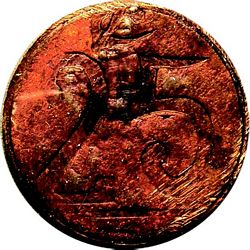
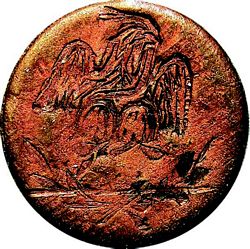
Copper Amecameca 25¢, 25mm, GB-252, A-EM-15. Adjustment marks on the denomination side are file marks from removing a wire (sheared) edge on the planchet. Note the file marks continue through the incuse numeral. This piece is an Above Average strike, a rare condition, with some mint red in the devices, a MS-something.
The brass Amecameca 25¢, first noted by Garza is a rare coin, and appears, overall, to have been struck later than the copper 25¢. A common feature I have noticed on the brass variety is that the numeral “25” punch is chipped, leaving missing pieces in the incuse numeral 25. This chipping was likely due to the steel punch being improperly hardenedand tempered, resulting in a brittle punch that chipped during use. Photographs of the brass 25¢ (Utberg, Gaytan) and coins (mine) show this late stage punch. One piece that went through an eBay sale, reported as brass, did not show the chipped punch. I have seen one copper example struck using the chipped punch, suggesting this detail is not universal but typical.
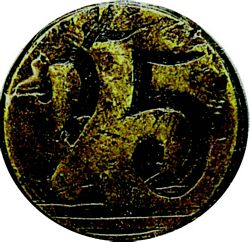
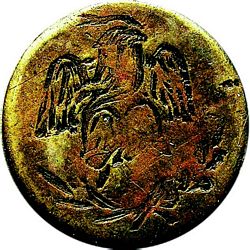
Brass Amecameca 25¢, 25mm, later strike, GB-UNL, A-EM-17. This coin is thicker than the copper strike, and may have used the stock of the 5¢, 10¢ and 20¢ brass strikes. Note the missing sections in the 2 of 25 in the lower section of the 2, as well as in the base of the 2.
An important distinguishing feature on the Amecameca 25¢ coin, shared by both the copper and brass strikes, is lathe marks (concentric circle arcs) visible in the incuse numerals. The marks are more visible on the copper example, above. These arcs originated from facing off the future die in a lathe, then removing everything except the numerals to make a numeral punch, the punch retaining the circular lathe marks. These marks are lacking on the modern counterfeit, as noted by Scott Doll. Another apparent copper counterfeit detail though, not mentioned by Scott, is that some or most of these counterfeits were struck over worn Republica 1-centavo or Estados Unidos 2-centavo. The coins were peined (i.e., tapped with a ball-pein hammer) to obliterate the design (the counterfeit 25¢ brass that started this article also showed pein marks, possibly on a worn brass State and Federal piece[??]). Remnants of the original design may be found around the edges, and matched to the original coin type. Imagine my thrill when I first saw one of these counterfeits with the ghost lettering, thinking I had spotted an overstruck example. Nope, not to be.
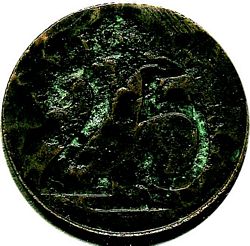
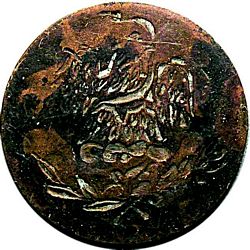
The modern counterfeit copper Amecameca 25¢. The denomination side is struck over a peined Republica 1¢. Note the traces of REPUBLICA MEXICANA lettering over and on the right of the 25, as well as the pein marks. The eagle side is struck over a modern Estados Unidos 2¢ (traces of the wreath on other side, and also peined). This view shows the angular knees of the eagle, a distinction of the modern counterfeit. Compare with above.