Construction of this hacienda began in 1529 on the orders of Hernán Cortés. In 1558 the Franciscan missionaries were forced to abandon the monastery, it was then that San Gabriel became a sugar plantation, which would later become the largest and most important sugar mill in Mexico
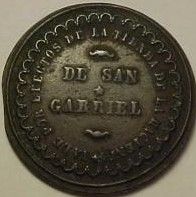
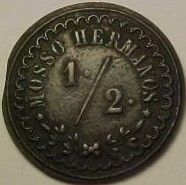
Grove 1566
Obverse: VALE POR EFECTOS DE LA TIENDA DE LA HACIENDA / DE SAN / GABRIEL
Reverse: MOSSO HERMANOS / 1/2
25 mm. bronze
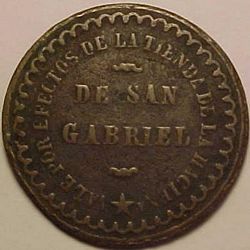
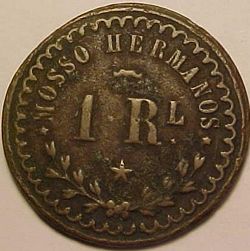
Grove 1567
Obverse: VALE POR EFECTOS DE LA TIENDA DE LA HACIENDA / DE SAN / GABRIEL
Reverse: MOSSO HERMANOS / 1 RL
29 mm. bronze
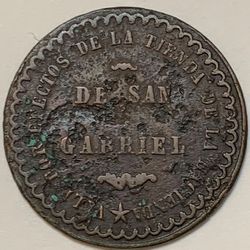
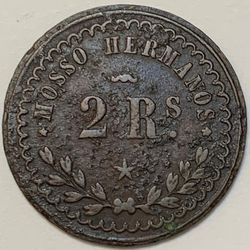
Grove 1568
Obverse: VALE POR EFECTOS DE LA TIENDA DE LA HACIENDA / DE SAN / GABRIEL
Reverse: MOSSO HERMANOS / 2 Rs
32 mm. bronze
Grove 1569
Obverse: HACIENDA DE SAN GABRIEL / VALE POR / 1 REAL/ DE / CARNE
Reverse: MOSSO HERMANOS / 1 RL
29 mm. bronze
Grove 1948
Obverse: LA TENDA DE LA HAC. / ½ / CUAHUISTLA / Ve Pr EFeTs DE
Reverse: FMC in monogram
39 x 29mm. bronze
Garibay{footnote}Saul Renato Garibay, Historia Numismática de Aguascalientes, Aguascalientes, 1985{/footnote} lists the following haciendas as issuing tokens: la Hacienda de Garabato, of Josefina Martínez de Aguilar; la Hacienda de Pabellón, of Manuel Azanza; La Punta, of the señores Madrazo; San Antonio y Anexas, of the señores lbarguengoitia; Ciénega Grande, of Francisco Rangel; Santa María de Gallardo, of Luz Díaz de Rincón Gallardo; Palo Alto, of José Rincón Gallardo; la Hacienda de Peñuelac, of Felipe Nieto and María Guadalupe Nieto Belaunzarán; la Hacienda de Cieneguilla, of José Rivera Río; la Hacienda de Cañada Honda, of José León García; la Hacienda de Venadero, of the hermanos Dosamantes Rul; la Hacienda de San Lorenzo, of Juan Muñoz; la Hacienda de Chichimeco, of María Guadalupe Belaunzarán; La Hacienda La Labor, of Jesús Salas López; and la Hacienda de Guaxolotes, of Coronel Gerónimo Ruiz de Esparza, now the Ganadería Santa Rosa de Lima.
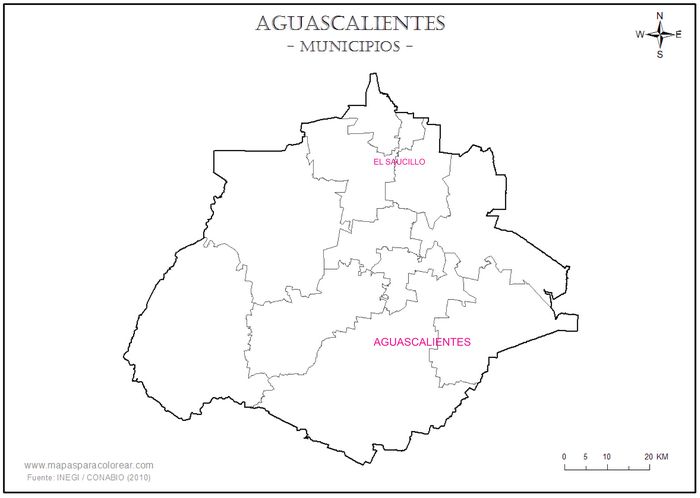
This hacienda of 6,000 hectares is situated 22 kilometres north-east of Aguascalientes. Up to 1898 it was owned by Roberto Camarena, who created his own paper issue to pay his workers. In 1899 the hacienda passed from the Camarenas to José León García.
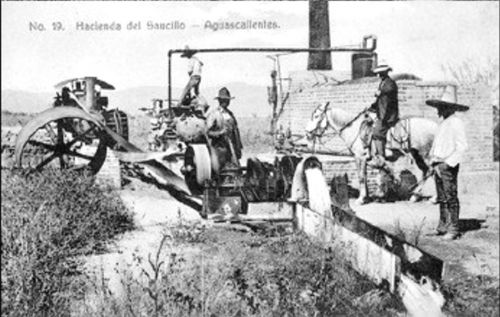
El Saucillo is 44 kilometres due north of Aguascalientes.
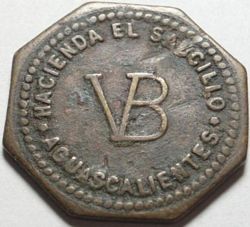
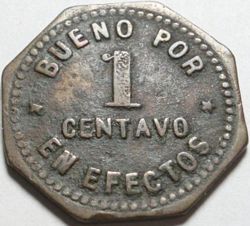
Grove 1608
Obverse: HACIENDA EL SAUCILLO / VB / AGUASCALIENTES
Reverse: BUENO POR / 1 / CENTAVO / EN EFECTOS
25mm. brass
Grove 1609
Obverse: HACIENDA EL SAUCILLO / VB / AGUASCALIENTES
Reverse: BUENO POR / 10 / CENTAVOS / EN EFECTOS
25mm. brass
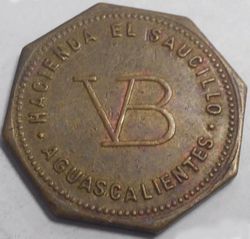
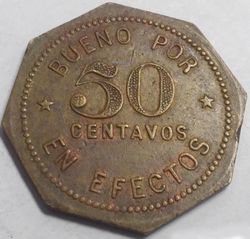
Grove
Obverse: HACIENDA EL SAUCILLO / VB / AGUASCALIENTES
Reverse: BUENO POR / 50 / CENTAVOS / EN EFECTOS
mm. brass
Grove 1249
Obverse: ERASMO DE LA ROCHA / CHIHUAHUILLA / DURANGO, MEXICO
Reverse: BUENO POR / ¼ / DIA DE TRABAJO
24mm. bronze
Grove 1250
Obverse: ERASMO DE LA ROCHA / CHIHUAHUILLA / DURANGO, MEXICO
Reverse: BUENO POR / 1 / DIA DE TRABAJO
35mm. bronze
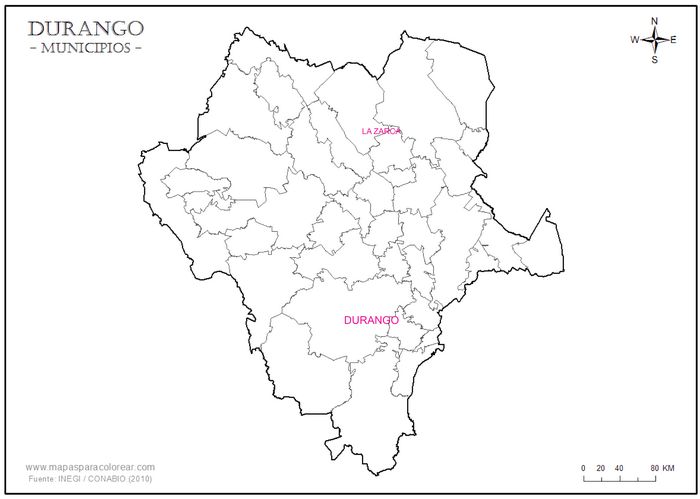
The Hacienda of San Mateo de la Zarca is located in the north of the state.
Luciano Veyán Lapelouse was the son of French immigrants who had originally established themselves in business in Veracruz before moving to the north during the French intervention. On 26 December 1877 Luciano and his wife Juana Natera del Fierro bought this hacienda for $28,000. The end of the Indian wars allowed Luciano to develop this hacienda and to become one of the richest landowners in the country, through acquiring the haciendas of San Lorenzo del Casco, San Juan Bautista de Cerro Gordo and Antonio del Paso del Pinole.
In 1898 this hacienda was recorded as having an area of 93,978 hectares, supporting 40,000 sheep.
Luciano Veyán died in 1905.
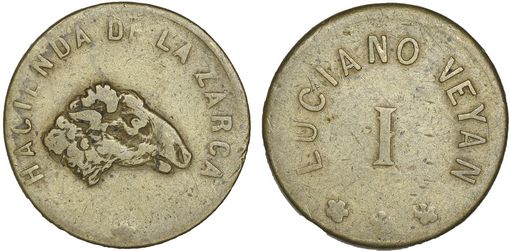
Obverse: around a sheep's head HACIENDA DE LA ZARCA
Reverse: LUCIANO VEYAN / 1
 Olegario Molina Solis was born in Bolonchenticul, in present-day Campeche, in 1843, the son of a small farmer and businessman. He moved with his family to Yucatán's capital, Mérida, in 1857, after the Caste War of Yucatán ravaged his family's properties. After securing degrees in law and topographical engineering, Molina served as secretary to Liberal General Manuel Cepeda Peraza, who defeated Emperor Maximilian's forces in the peninsula in 1867. During the 1870s Molina became an engineer, superintendent, and later a partner in the first railroad built in Yucatán, the Mérida—Progreso railway, which he helped complete, became the owner of six henequen plantations, and one of the wealthiest families in the state. In 1881 he founded the casa comercial O. Molina y Cía. with his son-in-law Avelino Montes, to export henequén. It is believed that Molina and Montes worked to depress fibre prices to benefit their North American partners, the International Harvester Company (and themselves). They used their dominant position in the fibre trade to expand the investment base of their company dramatically. Ventures in real estate, import/exports, and speculation in local industry, commerce, and infrastructure made Molina and Montes, and their extended network of family and friends, an economic octopus in turn-of-the-century Yucatán.
After 1902 Molina not only was the most powerful economic force in the region (as a result of the Harvester contract), but also exercised considerable political authority. In 1903, Governor Molina began to amass a landed empire in Yucatán. At a state-run auction of the possessions of a wealthy hacendado who had just died, Molina bought Haciendas Chochóh and Cacao in Tixkokob partido{footnote}Yucatán during the Porfiriato was divided into sixteen political districts called partidos {/footnote} for the extremely low price of 150,000 pesos, precisely at a time when boom prices had inflated property values. Included in the transaction were Haciendas Monchac and Kilinché and several adjoining tracts (anexos) for 75,000 pesos each. Although a lack of data prevents a direct connection between Molina’s political position and the acquisition of the haciendas, the fact remains that Molina was able to purchase all of León Ayala’s profitable estates at a fraction of their “real” value.
After purchasing the aforementioned estates, Olegario later bought haciendas in the Tixkokob, Mérida, and Izamal partidos. In addition, he purchased large tracts of land in Espita, 150 kilometres east of Mérida, a fertile sugar-growing region. By 1912, Molina was one of the largest sugar producers in the state; his San Francisco Holcá mill processed 18,400 kilograms of sugar and 46,000 kilograms of molasses and honey a year. By the end of the Porfiriato, Molina not only was the single largest landowner in the state, but his haciendas cultivated more henequen than those of any other planter.
At the end of 1907 Molina deployed all his forces to destroy the group headed by the Escalentes and gain total control of henequén production and the Ferrocarriles Unidos driving the Escalente companies into bankruptcy and accusing them of fraud.
Molina was a federal deputy from 1869 to 1871 and 1873 to 1875, senator from Oaxaca for 1900 and 1902, and governor of Yucatán for two terms, from 1 February 1902 to 6 March 1907. As governor he is remembered for the number of schools he built, the paving and draining of Mérida's streets, and a spate of capital improvement projects in Mérida (O. Molina y Compañía received lucrative contracts for many of these capital projects.) He also reorganized the property registry, rewrote the state constitution, reformed the penal and civil codes, and reorganized the state National Guard and Mérida police force.
In 1906 President Porfirio Díaz visited Mérida, and after marveling at all of the impressive physical changes, rewarded Molina by making him, in Match 1907, his Secretario de Fomento, Colonización e Industria. He fled to Havana in 1911 and died in exile on 28 April 1925.
Sac Nicté is located in the municipio of Bolón (now Umán) in the department of Hunucmá.
Olegario and Trinidad Molina's mongram appears on these tokens
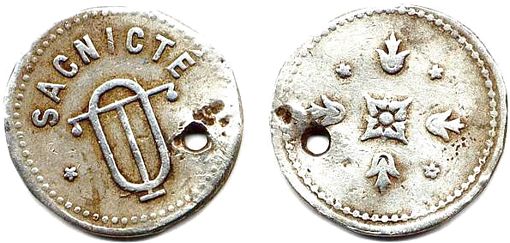
Grove 1857
Obverse: above a monogram OT SACNICTE
Reverse: ornate design
22mm. nickel
Grove 1858
Obverse: above a monogram OT SACNICTE
Reverse: ornate design, counterstamped L. C. / 20
22mm. nickel
Grove 1859
Obverse: above a monogram OT SACNICTE
Reverse: ornate design
25mm. nickel
There are two tokens asigned to the earlier owner of the hacienda. Silverio Sansores.
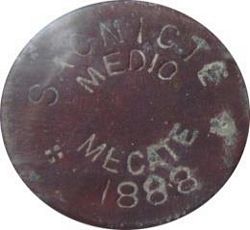
Obverse: SACNICTE / MEDIO / MECATE / 1888
Reverse: blank
27mm.
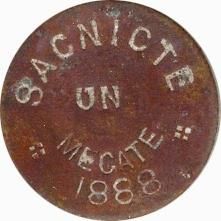
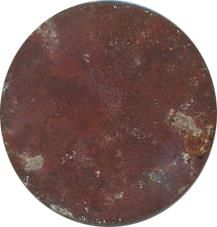
Obverse: SACNICTE / UN / MECATE / 1888
Reverse: blank
28mm.
Sanlahtah is located in the municipio of Tekantó, about 60 kilometres east of Mérida.
Olegario and Trinidad Molina's mongram appears on these tokens
Grove 1870
Obverse: above a monogram SANLAHTAH
Reverse: an ornate design
21 mm. nickel
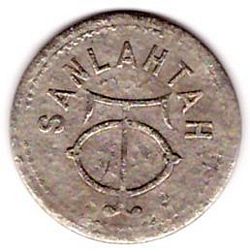
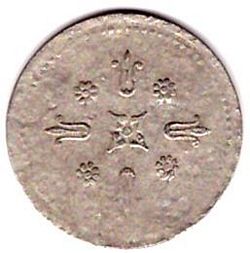
Grove 1871
Obverse: above a monogram SANLAHTAH
Reverse: an ornate design
25 mm. nickel
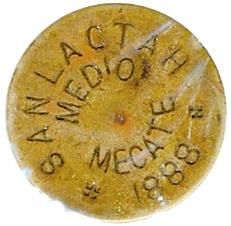
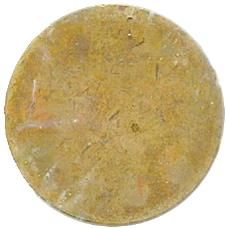
Obverse: SANLAHTAH / MEDIO / MECATE / 1888
Reverse: blank
27 mm.
Obverse: above a monogram SANLAHTAH
Reverse: an ornate design
27.5 mm.
Also
The Peón family was a distinguished patrician family that settled in the Yucatán Peninsula in the eighteenth century and could claim descent from Francisco de Montejo, the Spanish conquistador who had led the Yucatán campaign. Throughout the colonial period, the Peón and Cámara families had been the principal landowners in the Yucatán peninsula, owning vast tracts of property.
With wealth based in large landed estates acquired before the boom, the Peons expanded their stake in the regional economy by participating in a variety of businesses and industries. Although they did not date back to the original conquistadors of Yucatán, as several local families claimed to do, their prominence and long-standing tenure in eighteenth- and nineteenth-century Yucatecan society qualified them as gente decente (“respected people”).
The Porfirian generation of Peóns, despite their aristocratic trappings, did not merely accept the intrusion of wealthy henequen merchants into their coterie of respected families, but actively engaged in business partnerships, social amenities, and intermarriage with nouveaux riches entrepreneurs.
The Peóns, lacking an all-powerful figure like Olegario Molina, relied instead on sophisticated subregional empires that permitted them to control all phases of henequen production within certain geographical areas. Hence, various wings of the Peón family not only were the largest land-owners in a particular subregion, but they exercised considerable control over local marketing practices, transport networks, and sources of all-important mortgage capital. This dominance assured the Peóns flexibility in fibre shipments, control over every phase of the marketing cycle from field to warehouse, and, with the uncertain status of fibre price fluctuations, a free hand to speculate in a rapidly changing real estate market. In this fashion, the Peón y Peón wing dominated western Hunucmá and Mérida partidos (about 5 to 10 kilometres west of Mérida), the Peón y Regil brothers rivaled the Molina holdings in Tixkokob municipio (25 kilometres east of Mérida), while the Peón-Losa, Domínguez Peón, and Peón Cetina wings combined to gain a strong foothold in Maxcanú (60 kilometres southwest of Mérida).
Carlos Peón Machado was born in Mérida, in 1859, the second son of Felipe Peón Machado and María Machado y Machado. His sister, Nicolasa, was the wife of Eusebio Escalante. Later, Peón's daughter, Sara Peón Suárez would marry Eusebio Escalante Peón, the son of Eusebio Escalante Bates and Nicolasa Peón Machado.
Carlos married María de la Concepción Suárez Villamil, daughter of Joaquín Suárez Cámara, a wealthy landowner related to the Cámara family, and María Villamil Vales.
Before becoming a politician, Peón acted for twelve years as the administrator of his father's estates, which included Hacienda Tabi, a sugarcane mill that he had industrialized importing a steam engine and decauville railways. Starting in 1873, he also acquired the Hacienda Temozón, one of the most important in the region, that was dedicated to the production of henequen and at its zenith had an area of 6,643 hectares and 640 employees. He also participated in several businesses with his brother-in-law Eusebio Escalante. After the death of his father, Carlos Peón became the head of the Peón family.
In 1875 Carlos were elected as Governor afor the period that was to end on 31 January 1878.[2] However, he forced to abandon his in December 1876 when Porfirio Díaz overthrew Sebastían Lerdo de Tejada. In 1894, Peón was elected Governor for the four-year term between 1894 and 1898, being the first civilian to hold this position after a long period of military governments. A firm believer in economic liberalism, during his administration he stimulated economic development through private enterprise, particularly concentrating on promoting the henequen industry in Yucatán.
Upon retiring from political life, Carlos Peón returned to the private sector, where he became a business partner of Eusebio Escalante, his brother-in-law, "in almost all of his companies." Ferrocarriles Unidos de Yucatán, for example, was a profitable railroad company that was controlled by Escalante family and Carlos Peón was appointed chairman of the board of directors.
The panic of 1907 led to the collapse of the Escalante trading house (Casa Escalante), which undoubtedly had a negative effect on Peón's wealth.
He died in Mérida, Yucatán, on 11 September 1923.
Augusto Luis Peón, the son of Manuel José Peón Maldonado and his wife Loreto Peón Cano (of the Peón y Peón wing) was the the most successful of all Peóns. He fought for the Maximilian imperialists, but despite their defeat, the Peón y Peón wing (along with fellow Conservatives) did not suffer economically during the Liberal restoration.
Due to the systematic acquisition of large cattle ranches after the Caste War, the Peón y Peón wing was well equipped to take advantage of the ensuing henequen boom. Within eight years (1853-61) Manuel José Peón y Maldonado purchased four large cattle ranches: San Antonio Yaxché, Ulilá, Cheuman, and Balché in western Hunucmá and Mérida partidos. The properties, except for small herds of grazing cattle and some rented corn plots (milpas), were generally undeveloped. Peón y Maldonado’s avowed intention, written into the bill of sale, was to increase those livestock herds. Several years later, he applied to the state ministry of development for a public land grant of four square leagues of adjoining properties and his request was approved by local officials who overrode village objections to the sizeable grants (totaling more than 7,000 hectares).
Manuel José, like many of his contemporaries, gradually transformed these ranches into full-fledged henequen plantations. When he died in 1873, the estates were distributed among his surviving heirs, all of whom continued the process of modernization. Augusto Luis, Manuel’s second son and, after Arturo’s death, the oldest heir, inherited San Antonio Yaxché, the largest of the estates. By the end of the Porfiriato, Augusto had turned the relatively undeveloped cattle ranch that Manuel had purchased in 1853 into one of the largest and most successful henequen plantations in Yucatán. More than any other Peón, Augusto was responsible for creating the subregional empire that the family enjoyed in western Hunucmá and Mérida. His mode of operation was to control or assure control over all factors of production, leaving little to chance, a powerful advantage in an industry that bankrupted as many as it endowed.
First Augusto modernized Yaxché by importing English boilers, American manufactured steam engines, and Yucatecan invented, though United States made, defibering machines to process the fiber. Narrowgage “Decauville” track imported from Belgium was laid throughout the estate, connecting distant fields with the central processing area and thereby improving the plantation’s productivity. The animal-powered tramways also served to join the hacienda with a nearby railway depot, further reducing transport costs.
Augusto also reduced the self-sufficiency of the estate, by limiting corn rental plots and planting nearly all available lands in henequen. By the 1880s, Yaxché, like other henequen estates, found itself importing corn, beans, and other staples from other parts of Mexico or the United States in an effort to feed its growing labour force. This was recruited from nearby villages and bolstered by indentured immigrants from other parts of Mexico, the Caribbean, and the Far East.
Following in his father’s footsteps, Augusto continued to expand Yaxché’s borders. He used two techniques, each representative of methods employed by many Yucatecan hacendados. First, he acquired land when the federal government ordered the dismemberment of corporate landholdings such as village common lands (ejidos) by buying out individual recipients, and second, he bought out neighbouring estates. Often he would loan nearby planters mortgage capital and then repossess their holdings when they defaulted on their payments. In 1896, for example, Augusto and his sister Loreto, during a bust cycle in the regional economy, made seven loans within a span of weeks to local hacendados in nearby Ucu and Caucel. Several years later the haciendas were forfeited to the Peóns when the overmortgaged planters failed to meet their payments. Within thirty years of his inheritance of San Antonio Yaxché, Augusto tripled the size of the estate (to more than 6,000 hectares) by outright purchase, assimilation of parcelled village lands, and mortgage-credit default of neighbouring landlords.
Peón also invested in the railway network and in warehouses in Mérida and Progreso to store the henequen, thus acting as a broker as well as a planter and shipper.
Many henequeneros overextended themselves with second and third mortgages and Peón, who possessed sufficient capital to play the role of creditor, often was able to assume control of properties by default. In the 1907 fiscal crisis, for example, he acquired haciendas in nearby Uman (Hacienda Tedzidz), Ticul (Yokat), and Tekax (Polyuc). In all three cases, Augusto had extended mortgages during the boom years of 1898-1904. As the market price of fiber declined, the regional economy faltered, land values plummeted, capital became scarce, and planters were unable to pay their creditors. In the case of Hacienda Yokat, Peón was forced to sue the proprietor, Fernando García Fajardo. The court forced the debtor to forfeit Yokat to Peón at a fraction of its “real” value. A year later, after fiber prices had recovered, Augusto sold the hacienda to three entrepreneurs for 600,000 pesos.
Peón did invest in local commerce and industry. Besides participating on the first board of directors of the Banco Mercantil (the first bank established in the peninsula in 1890), he also bought shares in a variety of joint-stock enterprises. Augusto also played a role in Molina’s gubernatorial administration, acting as both president of the Mérida town council (ayuntamiento) and later jefe politico of Mérida partido.
Augusto L Peón owned multiple haciendas at Cheumán, Elená, Hobonyá, Mucuyché de Peón, Sabacalá, Sotuta de Peón, Uayalceh de Peón, Yaxché de Peón, Xdul and elsewhere (Bagundo Crespo lists these three tokens under Hacienda San Antonio Tedzidz).
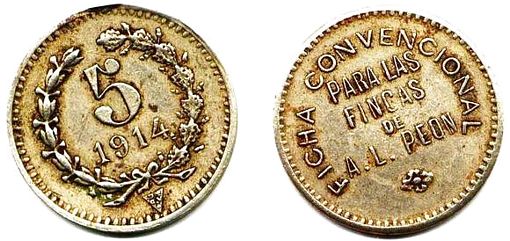
Grove 1388
Obverse: FICHA CONVENCIONAL / PARA / LAS / FINCAS / DE / A. L. PEON
Reverse: 5 / 1914
17 mm. nickel
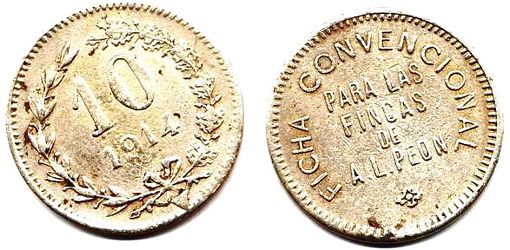 Grove 1389
Obverse: FICHA CONVENCIONAL / PARA / LAS / FINCAS / DE / A. L. PEON
Reverse: 10 / 1914
22 mm. nickel
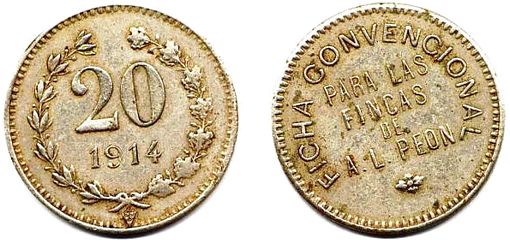 Grove 1390
Obverse: FICHA CONVENCIONAL / PARA / LAS / FINCAS / DE / A. L. PEON
Reverse: 20 / 1914
20 mm. nickel
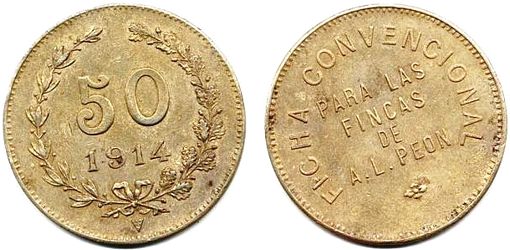 Grove 1391
Obverse: FICHA CONVENCIONAL / PARA / LAS / FINCAS / DE / A. L. PEON
Reverse: 50 / 1914
32 mm. nickel
Grove 1392
Obverse: A. L. P.
Reverse: No 5
17 mm. nickel
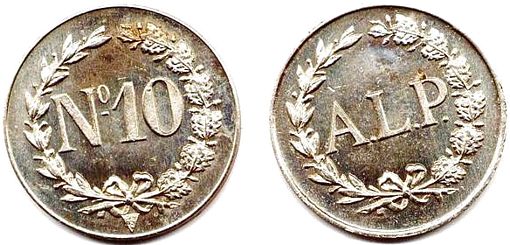 Grove 1393
Obverse: A. L. P.
Reverse: No 10
22 mm. nickel
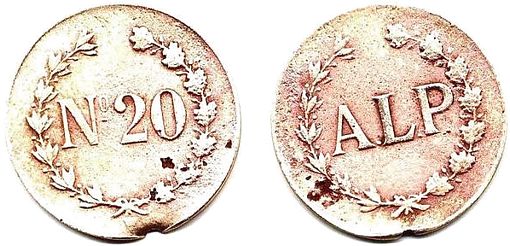 Grove 1394
Obverse: A. L. P.
Reverse: No 20
25 mm. nickel
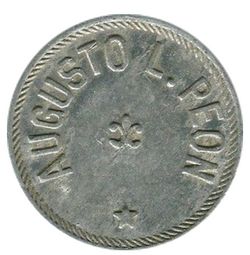
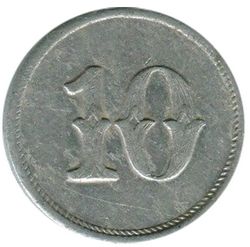
Grove 1395
Obverse: AUGUSTO L. PEON
Reverse: 10
20 mm. aluminum
Grove 1396
Obverse: AUGUSTO L. PEON
Reverse: 20
29 mm. aluminum
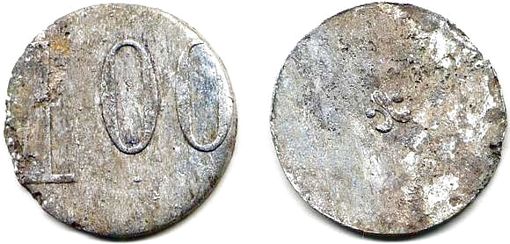 Grove 1397
Obverse: a fleur-de-lis
Reverse: 1 00
21 mm. aluminum
This finca was situated in the municipio of Ucú.
Grove
Obverse: above a laurel leaf, YAXCHE / ¼ / 1888
Reverse: FICHA CONVENCIONAL / PARA LAS / FINCAS / DE / A. L. PEON
17 mm. nickel
Grove
Obverse: above a laurel leaf, YAXCHE / ½ / 1888
Reverse: FICHA CONVENCIONAL / PARA LAS / FINCAS / DE / A. L. PEON
22 mm. nickel
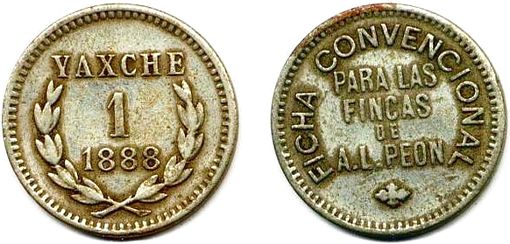 Obverse: above a laurel leaf, YAXCHE / 1 / 1888
Reverse: FICHA CONVENCIONAL / PARA LAS / FINCAS / DE / A. L. PEON
24 mm. nickel
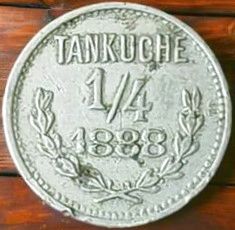
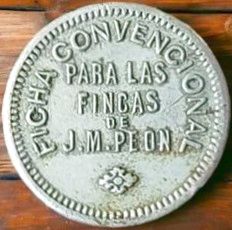
Grove 1410
Obverse: above a laurel wreath TANKUCHE / ¼ / 1888
Reverse: FICHA CONVENCIONAL / PARA LAS . FINCAS / DE / J. M. PEON
17 mm. nickel
Grove 1411
Obverse: above a laurel wreath TANKUCHE / ½ / 1888
Reverse: FICHA CONVENCIONAL / PARA LAS . FINCAS / DE / J. M. PEON
17 mm. nickel
This hacienda is located in the municipio of Acanceh, 25 kilometres southeast of Mérida on the main road to Valladolid. In 1888 the hacienda was owned by Lorenzo Peón.
Grove 1628
Obverse: around a henequen plant HACIENDA TICOPO / L. PEON
Reverse: FICHA CONVENCIONAL / 1/4 / REAL / 1888
18mm. nickel
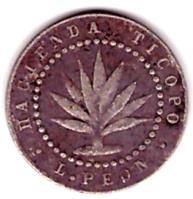
Grove 1629
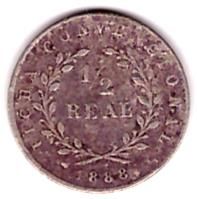
Obverse: around a henequen plant HACIENDA TICOPO / L. PEON
Reverse: FICHA CONVENCIONAL / 1/2 / REAL / 1888
21mm. nickel
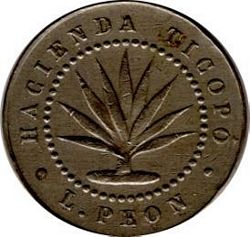
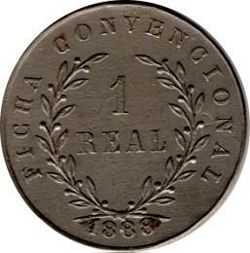
Grove 1630
Obverse: around a henequen plant HACIENDA TICOPO / L. PEON
Reverse: FICHA CONVENCIONAL / 1 / REAL / 1888
25mm. nickel
Bagundo Crespo also lists fichas for 1 mecate, 2 mecates, 3 mecates, 5 mecates, 250 pencas, 500 pencas, 1000 pencas and 2000 pencas. such as
Obverse: 2000/ PENCAS / TICOPO / M. C. G.
Reverse:
50 x 63mm.
San Bernardo is located in the municipio of Maxcanú.
Obverse: HACIENDA SAN BERNADO / MIGUEL PEON
Reverse: 500 / PENCAS
29mm. aluminum
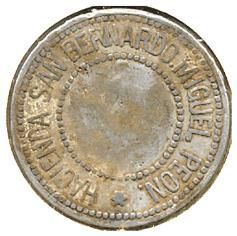
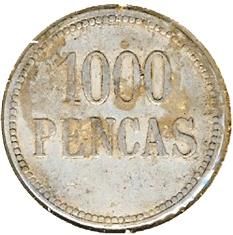
Obverse: HACIENDA SAN BERNADO / MIGUEL PEON
Reverse: 1000 / PENCAS
29mm. aluminum
Grove 1562
Obverse: HACIENDA SAN BERNADO / MIGUEL PEON
Reverse: ½ / MECATE
19mm. aluminum
Obverse: HACIENDA SAN BERNADO / MIGUEL PEON
Reverse: 1 / MECATE
21mm. aluminum